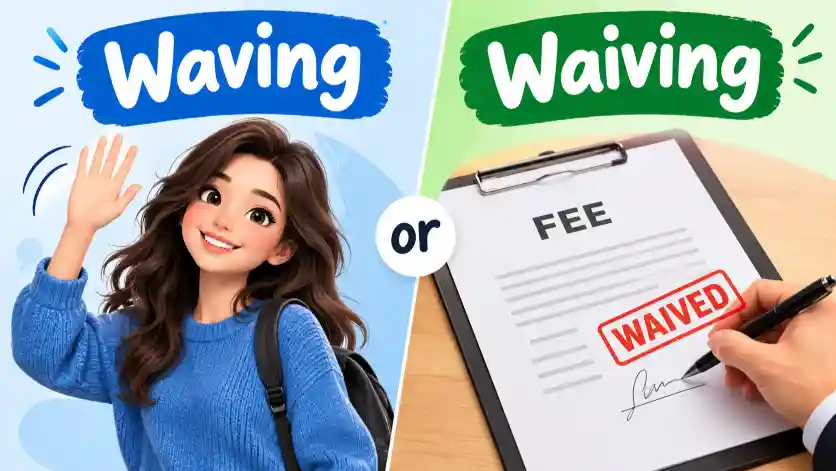
Waving and waiving are both correct English words, but they have completely different meanings. Waving comes from the verb wave and usually describes moving your hand, an object, or something from side to side.
Waiving comes from the verb waive and means voluntarily giving up a right, rule, requirement, fee, or claim.
The two words are easy to confuse because they sound very similar. However, their meanings are quite different. If someone moves their hand to say hello, they are waving. If a company decides not to charge a fee, it is waiving the fee.
Understanding the difference between these words makes your writing clearer and helps you avoid a common spelling mistake.
Waving or Waiving: Quick Answer
Waving
It means moving something from side to side, especially a hand, arm, or flag.
She was waving at her friend.
Waiving
Waiving means voluntarily giving up a right, rule, requirement, fee, or condition.
The company is waiving the application fee.
Simple Rule
Waving = moving from side to side
Waiving = giving something up
What Does Waving Mean?
Waving as a Greeting
The most common meaning of waving involves moving your hand from side to side as a greeting or goodbye.
She was waving at me from across the street.
He smiled and started waving.
The children were waving goodbye.
Waving an Object
Waving can also describe moving an object from side to side.
He was waving a flag.
She stood outside waving a sign.
The man was waving a piece of paper.
Waving Hair or Something Moving
The word can also describe something that has a loose or flowing movement.
She has long, waving hair.
The waving grass moved in the wind.
In these examples, the idea is movement from side to side.
What Does Waiving Mean?
Waiving a Right
Waiving means choosing not to use a right or claim that you have.
He agreed to waive his right to appeal.
Someone who waives a right voluntarily gives up the ability to use it in a particular situation.
Waiving a Fee
Businesses and organizations often use waiving when they decide not to charge a fee.
The bank is waiving the annual fee.
The school is waiving the registration fee.
The company is waiving delivery charges.
Here, waiving means that the fee will not be required.
Waiving a Requirement
The word can also refer to a rule or requirement.
The university is waiving the admission requirement for eligible students.
The organization agreed to waive the minimum experience requirement.
The requirement still exists, but it is not being applied in that particular case.
Waving vs Waiving: Main Difference
Waving
It comes from wave.
It is connected with movement.
The girl was waving at her mother.
Waiving
Waiving comes from waive.
It is connected with giving up or not enforcing something.
The company is waiving the fee.
The easiest way to remember the difference is:
Wave → Waving → Movement
Waive → Waiving → Giving something up
Waving or Waiving in Everyday Sentences
Examples of Waving
I saw Sarah waving from the bus.
The children were waving their flags.
He kept waving at the camera.
She was waving goodbye.
The driver was waving to the pedestrian.
Examples of Waiving
The hotel is waiving the cancellation fee.
They are waiving the membership charge.
The company is waiving the requirement.
The customer asked about waiving the late fee.
The applicant signed a form waiving certain rights.
Common Mistakes With Waving or Waiving
Using Waving When You Mean Giving Something Up
Incorrect:
The company is waving the fee.
Correct:
The company is waiving the fee.
A fee cannot normally be waved in this meaning. It is waived.
Using Waiving for a Greeting
Incorrect:
She was waiving at me from the window.
Correct:
She was waving at me from the window.
The person is moving her hand, so waving is correct.
Confusing Wave and Waive
Remember that these words have different base forms:
Wave → waved → waving
Waive → waived → waiving
The meanings remain different even though the pronunciation can be similar.
Waving or Waiving in Formal Writing
Waving
It is appropriate when describing physical movement.
The flag was waving in the wind.
The employee was waving to the customers.
Waiving
Waiving is common in formal, legal, business, and administrative writing.
The applicant is waiving the right to receive a refund.
The institution is waiving the application fee.
The customer agreed to the terms by waiving certain rights.
Because waive often involves rights, conditions, fees, or requirements, waiving appears frequently in official documents.
Waving or Waiving: Grammar Forms
Forms of Wave
The verb wave can appear in several forms:
| Form | Example |
| Wave | I wave to my neighbor. |
| Waves | She waves at me. |
| Waved | He waved goodbye. |
| Waving | They are waving to us. |
Forms of Waive
The verb waive follows a similar pattern:
| Form | Example |
| Waive | They may waive the fee. |
| Waives | The company waives the charge. |
| Waived | The fee was waived. |
| Waiving | They are waiving the requirement. |
The important difference is the meaning, not simply the spelling.
Waving or Waiving: Easy Memory Trick
Think About Movement
If someone is moving a hand, flag, or object from side to side, use waving.
She is waving at me.
Think:
Wave = Move
Think About Giving Something Up
If someone gives up a right, fee, rule, or requirement, use waiving.
The company is waiving the fee.
Think:
Waive = Give Up
This simple connection can help you remember which word to use.
Waving or Waiving in Different Situations
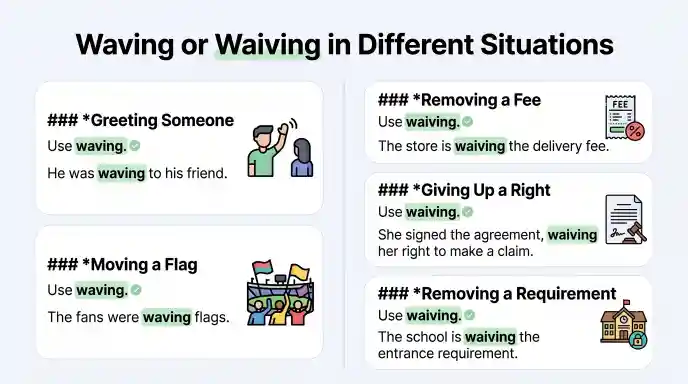
Greeting Someone
Use waving.
He was waving to his friend.
Moving a Flag
Use waving.
The fans were waving flags.
Removing a Fee
Use waiving.
The store is waiving the delivery fee.
Giving Up a Right
Use waiving.
She signed the agreement, waiving her right to make a claim.
Removing a Requirement
Use waiving.
The school is waiving the entrance requirement.
Quick Comparison of Waving and Waiving
| Word | Meaning | Example |
| Waving | Moving from side to side | She is waving at me. |
| Waving | Moving an object | He is waving a flag. |
| Waiving | Giving up a right | He is waiving his right. |
| Waiving | Removing a fee | They are waiving the fee. |
| Waiving | Not enforcing a requirement | The school is waiving the requirement. |
Key Takeaways
Remember These Rules
- Waving comes from wave.
- Waiving comes from waive.
- Waving usually describes movement from side to side.
- Waiving means voluntarily giving up or not enforcing something.
- You wave to someone.
- You waive a fee.
- You wave a flag.
- You waive a right.
- You wave goodbye.
- You waive a requirement.
FAQs About Waving or Waiving
1. What is the difference between waving and waiving?
Waving means moving something from side to side, especially a hand or flag. Waiving means voluntarily giving up a right, fee, requirement, or condition.
2. Is it waving or waiving a fee?
The correct expression is waiving a fee.
The company is waiving the fee.
A fee is something that can be given up or removed, so waiving is correct.
3. Is it waving or waiving goodbye?
The correct expression is waving goodbye.
She was waving goodbye to her friends.
This describes the movement of her hand.
4. Is it waving or waiving a right?
The correct expression is waiving a right.
He is waiving his right to appeal.
Here, waiving means voluntarily giving up the right.
5. Is it waving or waiving a flag?
The correct expression is waving a flag.
The fans were waving flags.
The word refers to the physical movement of the flag.
6. What does waiving mean?
Waiving means voluntarily giving up, removing, or choosing not to enforce a right, fee, rule, or requirement.
7. What does waving mean?
Waving usually means moving a hand, arm, flag, or another object from side to side.
8. Can waving and waiving sound the same?
Yes. In many varieties of English, waving and waiving sound very similar. Their spelling and meanings are different, which can make them easy to confuse.
9. How do I remember waving vs waiving?
Remember:
Waving = movement
Waiving = giving something up
If someone is moving a hand, use waving. If someone is giving up a fee, right, or requirement, use waiving.
10. Is “waiving the fee” correct?
Yes. Waiving the fee means deciding not to require someone to pay the fee.
The company is waiving the fee for new customers.
Conclusion
Waving and waiving sound similar, but they have very different meanings. Waving comes from wave and is mainly used for physical movement, such as moving your hand, waving a flag, or saying goodbye. Waiving comes from waive and means voluntarily giving up or not enforcing something, such as a fee, right, rule, or requirement.
The easiest way to remember the difference is to connect waving with movement and waiving with giving something up.
So, if someone is saying hello from across the street, they are waving. If a company decides not to charge a fee, it is waiving the fee. Keeping this simple distinction in mind will help you use both words correctly in everyday and formal writing.
Read More:
- Ran or Run: When Should You Use Each Word?
- Pant or Pants: British and American English Explained
- Lighted or Lit: Simple Grammar Rules Explained






2 thoughts on “Waving or Waiving: Which Word Should You Use?”