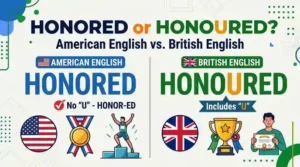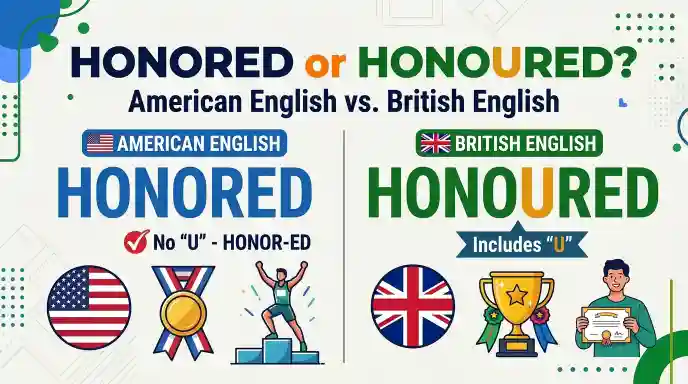
Honored and honoured are both correct spellings of the same word. American English uses honored, while British English commonly uses honoured and other spellings that follow British conventions.
The main difference is the letter “u.” American English drops it, but British English keeps it. Both spellings express the same idea: showing respect, recognizing someone’s achievements, or giving someone special recognition.
For example, an American newspaper might report, “She was honored for her service.” A British newspaper would usually report, “She was honoured for her service.”
Honored or Honoured: Quick Answer
Honored is the standard American English spelling, while honoured is the standard British English spelling. Both words have the same meaning and pronunciation.
- Honored: American English
- Honoured: British English
- Meaning: Showing respect or giving recognition
- Grammar: Past tense and past participle of honor or honour
Examples:
- The school honored the teacher at its annual ceremony. (American English)
- The school honoured the teacher at its annual ceremony. (British English)
Definition and Meaning of Honored
Honored is the American English past tense and past participle of the verb honor.
The word means to show respect, recognize someone’s achievements, or give someone special recognition. It can also describe feeling proud or grateful after receiving an award or invitation.
Examples:
- The city honored its brave firefighters.
- I felt honored when I received the award.
- The organization honored her years of service.
- He felt honored to speak at the graduation ceremony.
American schools, newspapers, businesses, and everyday speakers commonly use honored.
Definition and Meaning of Honoured
Honoured is the British English past tense and past participle of the verb honour.
It has the same meaning as honored. People use it to express respect, recognize someone’s achievements, or appreciate a person’s contribution.
The word can also describe feeling proud or grateful after receiving an award, invitation, or special recognition.
Examples:
- The community honoured its local heroes.
- She felt honoured when she received the invitation.
- The school honoured its former principal.
- He felt honoured to receive recognition for his contribution to science.
British speakers commonly use honoured in formal documents, publications, academic writing, and everyday communication.
Origin and History of Honored and Honoured
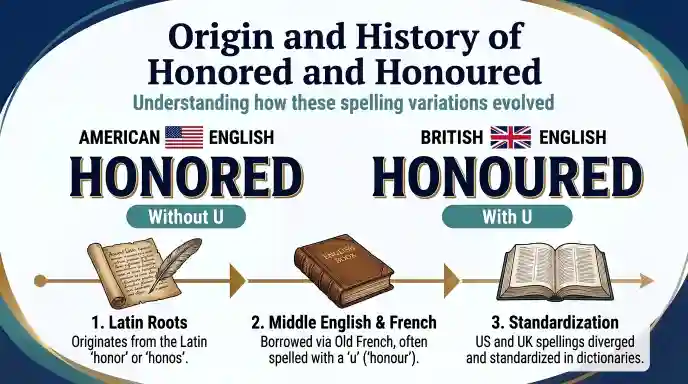
Both spellings come from the word honor, which has Latin roots. The Latin word referred to respect, esteem, and dignity. The word later entered English through Old French.
Over time, American and British English developed different spelling conventions.
In the United States, spelling reforms associated with Noah Webster helped popularize shorter forms. Americans adopted honor instead of honour.
As a result, American English uses honored, honoring, and honors.
British English retained the letter “u” in these words. British writers use honoured, honouring, and honours.
Today, both spelling systems remain correct. Choose the form that matches your audience and writing style.
British English vs American English Spelling
The main difference between honored and honoured is spelling. Both words have the same meaning and grammatical function.
| Feature | American English | British English |
|---|---|---|
| Preferred spelling | Honored | Honoured |
| Base verb | Honor | Honour |
| Present participle | Honoring | Honouring |
| Noun | Honor | Honour |
| Meaning | Respect or recognition | Respect or recognition |
| Pronunciation | Same | Same |
Canadian English commonly uses honoured, although spelling choices can vary by word and style guide. Australian and New Zealand English also generally use honoured.
Which Spelling Should You Use?
Choose the spelling that matches your audience, location, or writing guidelines.
Use Honored in American English
Use honored when writing for an American audience. US schools, businesses, newspapers, and official documents generally follow this spelling.
Examples:
- The committee honored the athlete after her championship win.
- We are honored to work with your organization.
- The president honored the volunteers for their service.
Use Honoured in British English
Use honoured when writing for a British audience or following British spelling conventions. Australian, New Zealand, and Canadian writers also commonly use this form.
Examples:
- The organization honoured the author for her achievements.
- We are honoured to welcome our guests.
- The charity honoured its longtime supporters.
Keep Your Spelling Consistent
For an international audience, either spelling may work. However, you should follow one spelling system throughout your article.
Avoid switching between honored and honoured unless you are explaining their differences.
Common Mistakes with Honored and Honoured
Writers sometimes assume that one spelling is wrong. However, both spellings are correct in their respective varieties of English.
Mistake 1: Treating Honoured as Incorrect
Incorrect claim: “Honoured” is always a spelling mistake.
Correct explanation: British English uses honoured, while American English uses honored.
Mistake 2: Mixing American and British Spellings
Inconsistent: The school honored the student, and the student felt honoured.
Consistent American English: The school honored the student, and the student felt honored.
Consistent British English: The school honoured the student, and the student felt honoured.
Mistake 3: Using the Wrong Related Form
Keep the spelling pattern consistent across related words.
- American English: honor, honored, honoring
- British English: honour, honoured, honouring
Remember that British English usually retains the letter “u” in these related forms.
Mistake 4: Assuming the Meaning Changes
The spelling does not change the meaning. Both words express respect, recognition, or gratitude.
For example, She was honored for her work and She was honoured for her work communicate the same message.
Honored or Honoured in Everyday Examples
People use both spellings in emails, news reports, professional documents, and personal messages. The preferred form depends on the English variety they follow.
Emails and Business Writing
- American: We are honored to invite you to the annual conference.
- British: We are honoured to invite you to the annual conference.
In News and Reports
- American: The volunteer received recognition because she helped the community.
- British: The community honoured the volunteer for her service.
In Academic Writing
- American: The university honored the researcher for her work.
- British: The university honoured the researcher for her work.
Social Media Posts
- American: I feel honored to be part of this amazing team!
- British: I feel honoured to be part of this amazing team!
In Award Ceremonies
- American: The committee honored the actor with a lifetime achievement award.
- British: The committee honoured the actor with a lifetime achievement award.
Honored vs Honoured: Comparison Table
| Point of Comparison | Honored | Honoured |
|---|---|---|
| Correct spelling? | Yes | Yes |
| Main variety | American English | British English |
| Base word | Honor | Honour |
| Meaning | Showing respect or recognition | Showing respect or recognition |
| Pronunciation | Same | Same |
| Common use | US publications and documents | UK and many Commonwealth publications |
| Example | She was honored for her work. | She was honoured for her work. |
Frequently Asked Questions
1. Is honored or honoured correct?
Both spellings are correct. American English uses honored, while British English uses honoured.
2. Is honoured British English?
Yes. British English uses honoured. Canadian, Australian, and New Zealand English also commonly use this spelling.
3. Is honored American English?
Yes. American English uses honored. The spelling follows the base word honor, which leaves out the letter “u.”
4. Do honored and honoured mean the same thing?
Yes. Both words mean respected, recognized, or given special recognition. Only the regional spelling differs.
5. How do you spell honoring in British English?
British English uses honouring, while American English uses honoring.
6. How do you spell honor in the past tense?
American English uses honored, while British English uses honoured.
7. Which spelling should I use for an international audience?
Either spelling can work. Choose one variety of English and use it consistently. If your publisher or organization provides a style guide, follow its recommendations.
Conclusion
Honored and honoured are both correct spellings with the same meaning. Use honored for American English and honoured for British English and many Commonwealth varieties.
Remember the base-word pattern: Americans write honor, while British writers generally write honour. Following the same spelling pattern throughout your article will help you maintain clear and consistent writing.
Read More:
- Valentine’s vs. Valentines: Which One Should You Use in 2026?
- Siked or Psyched: One Is Standard English, but Which One?
- Gnarly or Narly: The Simple Trick to Remember the Correct Word