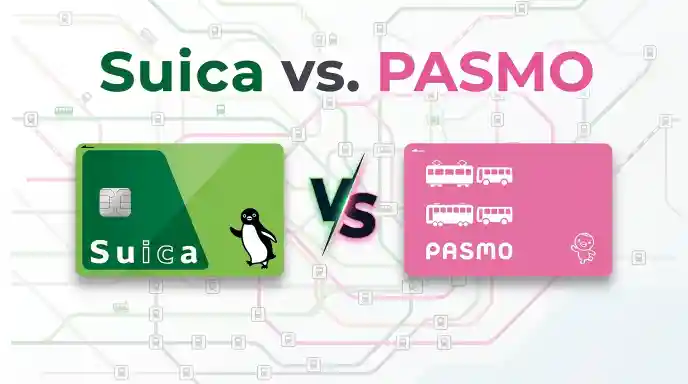
Suica and PASMO are both rechargeable IC cards used for public transportation and everyday payments in Japan. They work on many of the same trains, subways, and buses, especially around Tokyo. For most travelers, there is no major difference in convenience because both cards offer similar benefits.
The main difference is their issuing network. Suica is associated with JR East, while PASMO is associated with private railway, subway, and bus operators. However, you do not need to choose a card based only on the company that issues it. Both are accepted across many participating transport networks.
Visitors can also consider tourist-focused options, such as Welcome Suica and PASMO PASSPORT alternatives when available. These products may have different conditions from regular cards, so checking current availability before traveling is important.
In this guide, you will learn how Suica and PASMO compare, how they work, what they cost, and which option may suit your trip to Japan in 2026.
Quick Answer: Suica or PASMO?
Suica and PASMO are both excellent choices for traveling around Tokyo and other participating areas in Japan.
- Choose Suica if you prefer a card associated with JR East or plan to use a Suica mobile option on a supported device.
- Choose PASMO if you prefer a card associated with private railway and subway operators.
- For most Tokyo visitors, either card works well because both are accepted across many of the same transport networks.
- Neither card is an unlimited travel pass. Fares are deducted from your stored balance when you travel.
- Check tourist-card availability and current rules before your trip.
What Is Suica?
Suica is a rechargeable IC card issued by JR East, a major railway operator in eastern Japan. It allows passengers to pay for eligible train, subway, and bus journeys without buying a separate ticket for every trip.
To use Suica, simply tap the card on the reader at the ticket gate when entering and leaving the station. The correct fare is deducted automatically.
Suica can also be used for purchases at many participating convenience stores, vending machines, and other shops.
Main Features of Suica
- Convenient public transportation payments
- Rechargeable stored-value balance
- Acceptance on many participating transport networks
- Payments at participating shops and vending machines
- Physical and supported mobile options
- Less need to buy individual paper tickets
Suica is especially convenient for travelers who want one card for transportation and small everyday purchases.
What Is PASMO?
PASMO is a rechargeable IC card associated with private railway, subway, and bus operators in the Tokyo region. Like Suica, it helps passengers travel without purchasing individual tickets for every journey.
Passengers tap PASMO at the ticket gates, and the fare is deducted from the available balance. The card can also be used on many participating transport systems outside its original network.
PASMO is accepted at numerous participating stores and vending machines, making it useful beyond transportation.
Main Features of PASMO
- Tap-and-go travel
- Rechargeable balance
- Use on many participating trains, subways, and buses
- Payments at participating shops
- Physical and supported mobile options
- Convenient travel around Tokyo
PASMO is a practical option for travelers who use Tokyo’s subway and private railway networks.
Suica vs PASMO: Main Differences
The biggest difference between Suica and PASMO is their issuing network, not their everyday function.
| Feature | Suica | PASMO |
|---|---|---|
| Issuing association | JR East | Private railway and transport operators |
| Main purpose | Transportation and shopping | Transportation and shopping |
| Rechargeable | Yes | Yes |
| Tap-and-go travel | Yes | Yes |
| Accepted across participating networks | Yes | Yes |
| Payments at participating shops | Yes | Yes |
| Mobile option | Available on supported devices | Available on supported devices |
| Best for | Travelers who prefer the JR East-associated card | Travelers who prefer the PASMO-associated card |
For most visitors, the practical difference is small. The best choice often depends on availability, device compatibility, and the type of card you can obtain.
Suica vs PASMO: Which Is Better for Tourists?
Both cards can make traveling around Japan easier. Your choice depends on how you plan to travel and which card is available when you arrive.
Choose Suica If:
- You want a card associated with JR East.
- You prefer using a Suica option on a compatible smartphone.
- You want to pay for eligible transport and small purchases with one card.
- Suica is readily available at your arrival location.
Choose PASMO If:
- You prefer a card associated with Tokyo’s private railway and subway operators.
- You mainly expect to use participating subway and bus services.
- PASMO is more convenient to obtain during your trip.
- You want the same basic tap-and-go convenience offered by Suica.
You generally do not need both cards for an ordinary Tokyo visit. One compatible IC card is usually enough for many daily journeys.
Can You Use Suica and PASMO on the Same Trains?
Yes. Suica and PASMO are accepted on many of the same participating transportation networks.
This shared acceptance means you usually do not need to buy a different card for every railway company. You can use either card on eligible services that accept the relevant IC-card system.
However, acceptance is not universal. Some routes, special services, or journeys that cross certain areas may require separate tickets or additional arrangements.
Before a long-distance trip, check the ticket requirements for the exact route. An IC card is not a replacement for every limited-express ticket, reserved seat ticket, or long-distance rail fare.
Can You Use Suica and PASMO for Shopping?
Yes. Both cards can pay for purchases at participating businesses.
Common uses include:
- Convenience stores
- Vending machines
- Some restaurants and cafés
- Selected shops
- Other businesses displaying a compatible IC-card payment symbol
You simply tap the card on the payment reader when the business accepts it.
Remember that acceptance varies by store. Carry another payment method for businesses that do not accept IC cards, and check your remaining balance before making purchases.
Physical Cards vs Mobile Suica and PASMO
Both Suica and PASMO have mobile options for supported devices, but the setup process and features can differ by phone, operating system, and region.
Physical IC Cards
A physical card is useful if you do not want to rely on your smartphone.
- Easy to tap at ticket gates
- Does not require a compatible phone
- Can be convenient for visitors who prefer a simple payment method
- Must be kept safe like cash
Mobile IC Cards
Mobile versions may let you use your compatible smartphone or supported device instead of a physical card.
- Convenient for travelers who already use mobile payments
- Can reduce the need to carry an extra card
- Availability depends on device compatibility and setup requirements
- May require a compatible payment method to add funds
Check your phone’s compatibility before relying on a mobile card during your trip. A physical card may be the simpler option if you are unsure.
Suica vs PASMO: Cost and Recharge
Both cards use a stored-value system, meaning you add money to the card and fares are deducted from the balance as you travel.
The total amount you spend depends on your journeys and purchases, not simply on which card you choose.
How Recharging Works
You can generally add money through supported station machines and other designated recharge methods. Mobile-card users may have additional options depending on their device and payment setup.
Do You Pay a Deposit?
Regular physical cards have traditionally required a ¥500 deposit, though availability and card conditions can change. Tourist-focused products may have different rules.
Are the Cards Unlimited Travel Passes?
No. Suica and PASMO are not unlimited travel passes. They pay eligible fares using your stored balance.
If you plan to travel extensively in a short period, compare the cost of individual fares with available transport passes to see which option offers better value.
Common Mistakes to Avoid
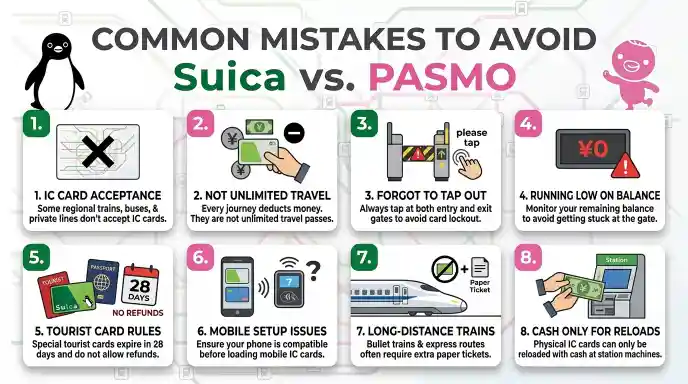
Travelers sometimes misunderstand how IC cards work. Keep these points in mind:
- Assuming every train accepts every IC card: Most participating networks share acceptance, but some services and routes have special requirements.
- Treating the card as an unlimited pass: Each eligible journey normally costs money from your balance.
- Forgetting to tap out: On systems that require it, you must tap at both the entrance and exit gates.
- Ignoring your remaining balance: Check the balance if a gate does not accept your card.
- Assuming all tourist cards have identical rules: Tourist products may have different validity periods, refund policies, and availability.
- Relying on an incompatible smartphone: Confirm mobile-card support before your trip.
- Expecting the card to cover every long-distance train service: Additional tickets may be required.
A little preparation can prevent delays and make travel around Japan much smoother.
Suica vs PASMO: Which One Should You Choose?
Your best choice depends on your travel plans, but for many visitors, the decision is straightforward.
| Traveler Type | Suggested Choice |
|---|---|
| First-time Tokyo visitor | Either Suica or PASMO |
| Traveler using many participating subway lines | Either card |
| Traveler who prefers JR East’s card system | Suica |
| Traveler who prefers the PASMO-associated network | PASMO |
| Smartphone user | Whichever mobile option supports the device |
| Visitor who prefers a physical card | Whichever suitable card is available |
| Traveler taking long-distance rail journeys | IC card plus any required tickets |
Overall, Suica and PASMO are very similar for everyday travel around Tokyo. Choose the one that is easier to obtain and use with your transportation plans.
Frequently Asked Questions
1. Is Suica better than PASMO?
Neither is universally better. Both offer convenient payments on many participating transport networks. For most Tokyo visitors, either card is a good choice.
2. Can I use Suica instead of PASMO?
Yes, on many transportation services that accept both cards. Check specific routes and services for exceptions.
3. Can I use PASMO instead of Suica?
Yes, on many of the same participating networks. PASMO is suitable for numerous train, subway, and bus journeys around Tokyo.
4. Can I use one card for trains and shopping?
Yes. Both cards can pay eligible transport fares and purchases at participating businesses.
5. Do Suica and PASMO expire?
Rules depend on the type of card. Regular cards and tourist-focused products may have different validity conditions. Check the current terms for the exact card you obtain.
6. Should tourists get a physical card or a mobile card?
A physical card is simple and does not depend on phone compatibility. A mobile card can be more convenient if your device supports it. Choose based on your needs and available setup options.
7. Do I need both Suica and PASMO?
Most travelers do not need both. One compatible card is usually enough for everyday transportation and purchases on participating networks.
Conclusion
Suica and PASMO are both convenient IC cards for traveling around Japan in 2026. They offer similar benefits, including tap-and-go transportation payments, recharging, and purchases at participating businesses.
Suica is associated with JR East, while PASMO is associated with private railway and transport operators. However, their acceptance overlaps across many transportation networks, so the issuing organization usually does not make a major difference for ordinary Tokyo travel.
For most tourists, choose whichever card is easier to obtain and works with your travel plans. Check current availability, mobile compatibility, and card conditions before your trip, especially if you plan to use a tourist-focused version.
Meta Description: Suica or PASMO in 2026? Compare costs, train access, shopping, mobile options, and key differences to choose the right IC card for Japan travel.
Read More:
- Domestic or International: What’s the Difference?
- Bijou or Bijoux: Guide to Meaning, Spelling, and Correct Use
- Nest or Ecobee: Which Smart Thermostat Is Right for You?








1 thought on “Suica vs. PASMO: 7 Key Differences Every Traveler Should Know”