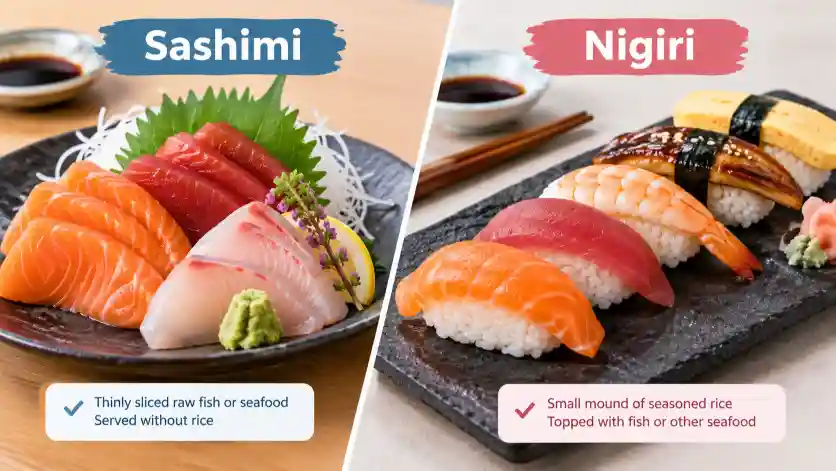
Sashimi and nigiri are two popular Japanese dishes, but they are not the same. Sashimi features thinly sliced raw fish or seafood served without rice, while nigiri combines a small mound of seasoned rice with a slice of fish or other seafood on top.
. Both are common choices at Japanese restaurants, but their ingredients, preparation, and presentation differ.
If you enjoy Japanese food, knowing the difference between sashimi and nigiri can help you choose the right dish from a menu. Sashimi is a good option if you want to focus on the taste and texture of the seafood itself. Nigiri combines seafood with vinegared rice, giving you a balance of flavors in each piece.
Although both dishes may feature salmon, tuna, or other seafood, the rice is the main difference. Sashimi has no sushi rice, while nigiri includes it. This guide explains what each dish contains, how chefs prepare them, how they differ, and how you can order them confidently.
Quick Answer: Sashimi or Nigiri?
- Sashimi: Thinly sliced fish or seafood served without rice.
- Nigiri: A small portion of vinegared sushi rice topped with fish, seafood, or another ingredient.
- Main difference: Sashimi is served without rice, while nigiri includes rice.
- Example: A slice of raw tuna served alone is sashimi. A slice of tuna placed on a small mound of sushi rice is nigiri.
Easy rule: Sashimi is seafood on its own; nigiri is seafood served on sushi rice.
What Is Sashimi?
Sashimi is a traditional Japanese dish that features carefully prepared, thinly sliced fish or seafood. Chefs usually serve it without rice, allowing diners to enjoy the seafood’s natural flavor, texture, and freshness.
Common sashimi ingredients include tuna, salmon, yellowtail, and certain types of shellfish. The slices may be served with soy sauce, wasabi, pickled ginger, or simple garnishes.
Common Types of Sashimi
1. Salmon sashimi
Salmon sashimi consists of slices of salmon served without rice. It is often chosen for its rich flavor and soft texture.
2. Tuna sashimi
Tuna sashimi is made from sliced tuna. Depending on the cut, it can have a lean texture or a richer, fattier taste.
3. Yellowtail sashimi
Yellowtail sashimi is known for its delicate flavor and smooth texture. It is commonly found on Japanese restaurant menus.
4. Octopus sashimi
Some restaurants serve thinly sliced octopus as sashimi. Its texture is firmer and chewier than that of many fish varieties.
How Is Sashimi Served?
Sashimi is often arranged neatly on a plate, sometimes with shredded daikon radish, herbs, or other garnishes. Diners may dip the slices lightly into soy sauce and add a small amount of wasabi.
Because sashimi is served without rice, the seafood itself is the main focus of the dish.
What Is Nigiri?
Nigiri is a type of sushi made by shaping a small portion of seasoned rice into an oval mound and placing a slice of fish or another topping over it.
The topping is often raw fish, but nigiri can also feature cooked seafood, egg, or other ingredients. Some pieces use a thin strip of seaweed to hold the topping in place.
Common Types of Nigiri
1. Salmon nigiri
Salmon nigiri features a slice of salmon placed over seasoned sushi rice. It combines the rich flavor of salmon with the mild, slightly tangy taste of rice.
2. Tuna nigiri
Tuna nigiri consists of tuna served on a small mound of sushi rice. The taste and texture vary depending on the type of tuna used.
3. Shrimp nigiri
Shrimp nigiri often uses cooked shrimp placed over rice. It is a popular option for people who prefer seafood that is not raw.
4. Eel nigiri
Eel nigiri commonly features cooked, glazed eel served over sushi rice. Its sauce often adds a sweet and savory flavor.
5. Tamago nigiri
Tamago nigiri is topped with Japanese-style sweet omelet. It offers a different flavor from fish-based nigiri.
How Is Nigiri Served?
Nigiri is usually served in small pieces that can be eaten in one or two bites. Soy sauce and wasabi may accompany it, although the chef may already season or sauce the topping.
The rice is an essential part of nigiri because it balances the topping and contributes to the overall taste and texture.
Origin of Sashimi and Nigiri
Sashimi and nigiri are both associated with Japanese culinary traditions, but their names describe different aspects of food preparation.
Origin of Sashimi
The Japanese word sashimi is commonly understood as referring to pierced or cut flesh. The dish developed as a way to serve carefully sliced fish and seafood, emphasizing the ingredient’s natural qualities.
Origin of Nigiri
Nigiri comes from a Japanese word meaning “to grasp” or “to squeeze.” This refers to the way a sushi chef shapes the rice by hand before adding the topping.
Nigiri sushi developed in Japan as a convenient style of sushi made with a hand-shaped portion of rice and a topping.
Sashimi vs Nigiri in Japanese Cuisine
Both dishes are part of Japanese cuisine, but they are served differently.
| Feature | Sashimi | Nigiri |
| Main ingredient | Sliced fish or seafood | Seasoned sushi rice with a topping |
| Rice included | No | Yes |
| Raw seafood | Common | Common, but not required |
| Cooked toppings possible | Some seafood may be cooked or prepared differently | Yes |
| Typical presentation | Slices arranged on a plate | Small individual rice mounds with toppings |
| Main focus | Seafood flavor and texture | Combination of rice and topping |
| Is it sushi? | Generally not classified as sushi | Yes, it is a type of sushi |
Important: Raw fish is not the only possible topping for nigiri, and the word sashimi does not mean every piece of seafood must be served in exactly the same way.
Which Should You Choose: Sashimi or Nigiri?
Your choice depends on your taste, appetite, and what you want from the meal.
Choose Sashimi If You Prefer Seafood Without Rice
Sashimi may suit you if you want to focus on the flavor and texture of fish or seafood.
It can be a good choice if:
- You prefer meals without rice.
- You enjoy the natural taste of seafood.
- You want to sample different fish varieties.
- You prefer a dish served in thin slices rather than individual rice portions.
Keep in mind that sashimi is not automatically lower in calories in every situation. The nutritional value depends on the seafood, portion size, and any sauces or accompaniments.
Choose Nigiri If You Want Seafood with Rice
Nigiri may be a better choice if you enjoy the combination of seafood and seasoned rice.
It can suit you if:
- You like traditional sushi.
- You prefer smaller, individual portions.
- You want a balance of rice and seafood.
- You enjoy trying both raw and cooked toppings.
Nigiri also offers variety because its toppings can include raw fish, cooked shrimp, eel, or egg.
Can You Order Both?
Yes. Many Japanese restaurants serve both dishes, so you can order sashimi and nigiri in the same meal. This allows you to compare the seafood on its own with the same or a similar ingredient served over sushi rice.
Common Mistakes About Sashimi and Nigiri
1. Thinking Sashimi Is a Type of Sushi
Sashimi is often served alongside sushi, but it is generally not considered sushi because it does not include seasoned sushi rice.
Correct understanding: Sashimi is sliced seafood served without rice; nigiri is a type of sushi.
2. Assuming All Nigiri Contains Raw Fish
Nigiri often features raw fish, but cooked toppings are also common.
For example, shrimp nigiri may use cooked shrimp, and tamago nigiri uses a cooked Japanese omelet.
3. Thinking Nigiri and Sashimi Have the Same Ingredients
Both dishes can use salmon or tuna, but their preparation and presentation differ.
- Sashimi: sliced salmon served without rice.
- Nigiri: salmon placed on seasoned sushi rice.
4. Assuming Sashimi Is Always the Healthier Choice
Neither dish is automatically healthier in every situation. Seafood type, portion size, rice, sauces, and individual dietary needs all affect the nutritional value.
5. Believing All Japanese Raw Seafood Is Safe to Eat
Raw or undercooked seafood can carry food-safety risks. Choosing a reputable restaurant that follows appropriate handling practices is important. People at higher risk of foodborne illness may need to avoid raw seafood and follow medical or public-health guidance.
Everyday Examples of Sashimi and Nigiri
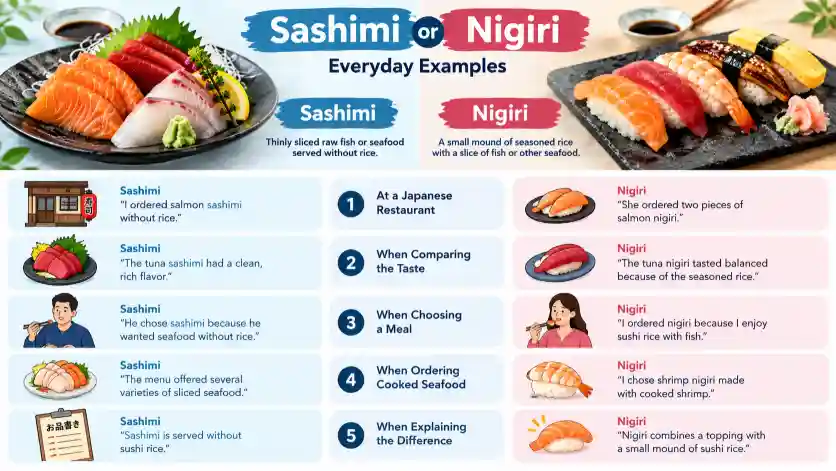
1. At a Japanese Restaurant
Sashimi: “I ordered salmon sashimi without rice.”
Nigiri: “She ordered two pieces of salmon nigiri.”
2. When Comparing the Taste
Sashimi: “The tuna sashimi had a clean, rich flavor.”
Nigiri: “The tuna nigiri tasted balanced because of the seasoned rice.”
3. When Choosing a Meal
Sashimi: “He chose sashimi because he wanted seafood without rice.”
Nigiri: “I ordered nigiri because I enjoy sushi rice with fish.”
4. When Ordering Cooked Seafood
Sashimi: “The menu offered several varieties of sliced seafood.”
Nigiri: “I chose shrimp nigiri made with cooked shrimp.”
5. When Explaining the Difference
Sashimi: “Sashimi is served without sushi rice.”
Nigiri: “Nigiri combines a topping with a small mound of sushi rice.”
Sashimi or Nigiri: Comparison Table
| Category | Sashimi | Nigiri |
| Rice | Not included | Included |
| Seafood preparation | Thinly sliced | Placed over shaped rice |
| Common toppings | Fish and seafood slices | Fish, seafood, egg, and other ingredients |
| Presentation | Usually arranged on a plate | Individual rice portions |
| Flavor experience | Focuses on the seafood | Combines topping and rice |
| Raw ingredients required | Not necessarily in every preparation | No; cooked toppings are possible |
| Best for | People who want seafood without rice | People who enjoy seafood with sushi rice |
Frequently Asked Questions
1. What is the main difference between sashimi and nigiri?
The main difference is rice. Sashimi is sliced fish or seafood served without rice, while nigiri consists of seasoned sushi rice topped with fish, seafood, or another ingredient.
2. Is sashimi considered sushi?
Sashimi is generally not classified as sushi because it does not contain seasoned sushi rice. Nigiri, on the other hand, is a type of sushi.
3. Is nigiri always raw?
No. Although raw fish is a common topping, nigiri can also feature cooked shrimp, cooked eel, Japanese omelet, and other prepared ingredients.
4. Which is better for beginners: sashimi or nigiri?
Nigiri may be a comfortable starting point for people who enjoy rice with their seafood. Sashimi may suit those who want to focus on the seafood alone. Beginners who prefer cooked ingredients can look for cooked nigiri options.
5. Does sashimi have rice?
Traditional sashimi is served without rice. It may come with garnishes or side dishes, but rice is not part of the sashimi itself.
6. Is sashimi healthier than nigiri?
It depends on the ingredients and portion sizes. Sashimi does not include sushi rice, while nigiri does. Both can provide protein, but the overall nutritional value varies by seafood type, preparation, and accompaniments.
7. Can you eat sashimi and nigiri together?
Yes. They are often served at the same Japanese restaurant. Ordering both lets you enjoy seafood on its own and seafood paired with seasoned rice.
Conclusion: Sashimi or Nigiri?
The difference between sashimi and nigiri comes down to how the seafood is served. Sashimi consists of thinly sliced fish or seafood without rice, while nigiri is a type of sushi that combines a small mound of seasoned rice with a topping.
Choose sashimi if you want to enjoy the seafood without rice. Choose nigiri if you prefer the combination of fish or another topping with seasoned rice. Both dishes offer variety, and both can feature ingredients such as salmon, tuna, and other seafood.
Remember, nigiri isn’t always made with raw fish. Cooked shrimp, eel, and egg are also popular options. If you are new to Japanese cuisine, trying both dishes can help you discover which preparation you enjoy most.
Read More:
- Mayo or Mayonnaise? The Simple Truth About That Creamy Jar
- CSM or UEFI: The Right Choice for Windows Installation
- Domestic or International: What’s the Difference?









1 thought on “Sashimi or Nigiri: Which Japanese Dish Should You Choose?”